TIKI Ladies ZEPHA 4/3 GBS BACK ZIP Steamer Wetsuit
TIKI also sent out a Ladies ZEPHA 4/3 GBS BACK ZIP Steamer wetsuit for Cleo to put through its paces. Here’s a little more info on the limestone based neoprene….yes that’s right wetsuits made from rocks!!
Limestone is a sedimentary rock created over millions of years from fossilized marine organisms and is remarkably free from impurities. It has been used in the production of many products around the globe and recently its properties have been brought to bear on the wetsuit industry. This has allowed companies to develop suits that make oil based neoprene suits pretty much obsolete. They provide serious advantages across a number of areas and exhibit the following functionality:-
Lightweight
Exceptional Thermal insulation
Super stretchy
Easy to take on and off
95% water impermeable
Reduced drag and increased speed
The design and manufacture of the limestone based neoprene means that it contains a 23% higher close cell structure than oil derived neoprene which makes it more buoyant and as these closed cells are gas filled a lot more heat insulating than old oil based neoprene.
Critically it has a maximum elongation of over 480%, and the human skin only stretches to about 70% making these wetsuits the most free moving and flexible.
Limestone based Neoprene is close to 95% impermeable to water you don’t have to spend energy warming more water in your suit.. you also come out pretty much dry. This means that the wetsuit will weigh a lot less after being in the water and will dry a heck of a lot quicker, so you can get into the water for a second time in a nice dry suit!
The micelle structure on the rubber also repels water and therefore reduces surface friction making it move through the water quicker, again great for paddling a board, conserving energy and therefore air in Scuba and a potentially devastating advantage during a triathalon.
How is limestone neoprene made?
The first stage of production is to make the polychloroprene rubber chips. To do this, extracted limestone is fed into a furnace and heated at a temperature around one-tenth of that used for refining petroleum. The source of the heat is from burning used tires and hydroelectric power sourced from several local dams (any waste heat is then reused to power a local eel nursery). From the furnace, components are reacted with other chemicals to make the acetylene gas needed for the polychloroprene rubber chips.
The polychloroprene rubber chips are then melted and mixed together with foaming agents and black carbon pigments, and then baked in an oven to make it expand. Once this sponge block has cured the next process is to slice it up into sheets. This is like slicing a loaf of bread, except it is slit horizontally and to the desired neoprene thickness. Finally, the soft sheets are laminated with high stretch nylon or polyester jersey knit to give them strength.
** Pembrokeshire Limestone Cliffs are not used in the manufacture of wetsuits. They are protected as part of the Pembrokeshire Coast National Park.
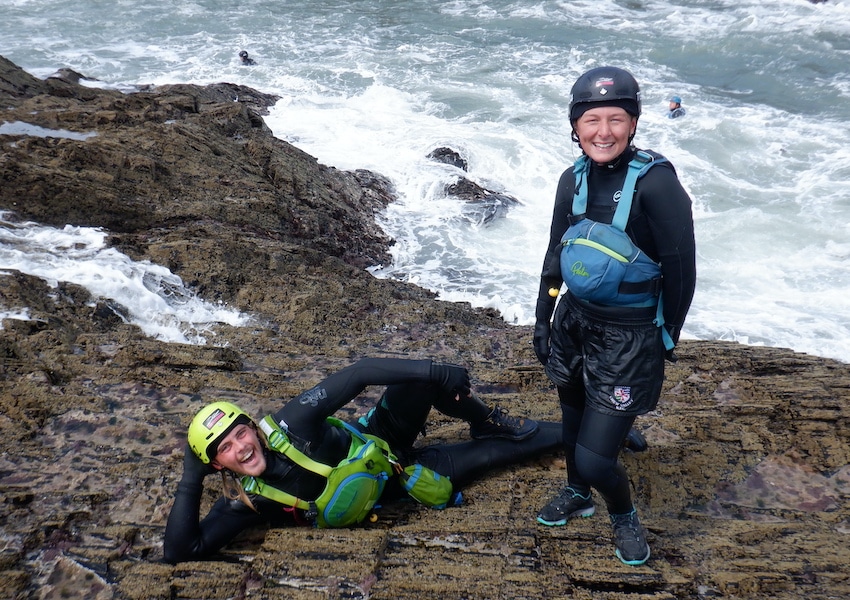
Woohoo, we’ve just taken delivery of this seasons new Tiki wetsuits. Why wait until summer to come and explore the stunning coastline of Wales, Coasteering is wicked fun all year round, especially if you’re well kitted out in toasty warm wetsuits
Great to see Tiki taking steps to be eco aware too…
* Uses Limestone based neoprene * Has been shipped by sea * Was packed in recycled card
Here’s what some of our winter/spring clients had to say about our Coasteering wetsuits & equipment…
“It wasn’t cold at all once you get all the gear on” April 2013
“The wetsuits certainly did their work too as we weren’t affected by the cold, either in or out of the water.” March 2013
“Ok it was early Feb and the sea was cold but Celtic Quest provided us all with good quality wetsuits, gloves, hats so wasn’t unpleasant” Feb 2013
“Kit is superb, even in winter it is not cold” Nov 2012
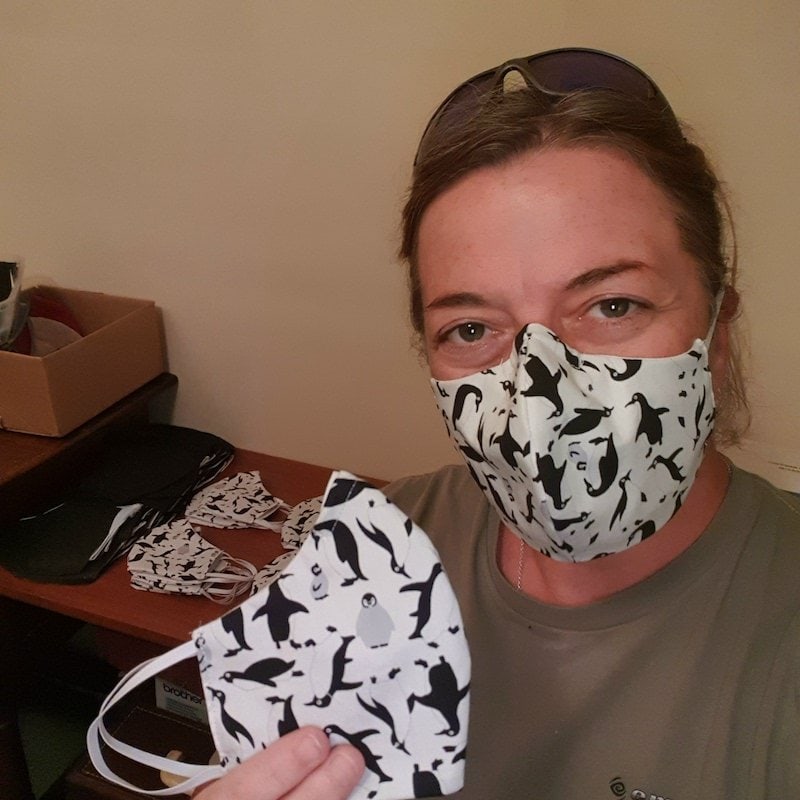
We’ve been out and about recently spreading the news (like you didn’t already know!!) that Folly Farm Adventure Park & Zoo are developing a new enclosure for p-p-p-penguins <(“)
The 16 Humboldt penguins which have travelled from France, Germany and Cornwall are finding their way around their new saltwater enclosure at Folly Farm. They are settling well and are currently being housed in the quarantine area of the new enclosure.
The Humbolt penguin is a South American penguin, that breeds in the wild in coastal Peru and Chile. They nest on islands and rocky coasts, burrowing holes in guano and sometimes using scrapes or caves.
Due to a declining population caused in part by over-fishing, climate change, and ocean acidification, the current status of the Humboldt penguin is threatened. Folly Farms penguins will be part of a European Breeding Programme.
“I had an amazing time coasteering with Cleo and Gareth at the Blue Lagoon in north Pembrokeshire. They are both great personalities and made the session a lot of fun, while giving lots of encouragement and tips to build confidence for the higher jumps.”
“Despite it being early March and the water ice cold, the excellent kit provided kept me warm and safe. I totally recommend Celtic Quest Coasteering for anyone looking for an adrenaline-filled adventure.”
Written by: Stephen Crabb MP, Parliamentary Under Secretary of State for Wales
Having worked in the outdoor industry for a number of years I saw an opportunity to develop an enterprise focusing on one activity, breaking away from the industry standard multi activity ‘jack of all trades’. Celtic Quest Coasteering was born back in 2008, its mission….to make Coasteering available to virtually everyone, not just adrenaline junkies. Whilst it can be an extreme sport, we tailor every adventure to suit the expectations and abilities of each adventurer, which includes children, non-swimmers, disabled clients and OAPs. Since launch five years ago our company has evolved from being a company offering thrilling outdoor experiences, to one that has a responsibility to the community around it.
From our customer feedback we know that many tourists come to Pembrokeshire to escape the rat race. Owing to the slow pace of life, visitors have little choice but to switch off and kick back. That said, there are plenty of tech savvy establishments, cafes, bars and accommodation providers offering high speed internet access for those who need it.
As an activity operator in Pembrokeshire we are members of the tourism community. Most successful organisations in the county have a strong sense of place proactively referring visitors and clients to each other. Visitors that book Coasteering with ourselves will often ask for recommendations of where to stay, where to eat and things to do in the area. We have developed valuable relationships with a variety of organisations in the area. We often visit referral partners to assess their quality and to strengthen the relationship.
Pembrokeshire is competing with many other destinations. If visitors book Coasteering with us, they invariably book local accommodation and spend further time and money in the county. We are not just a Coasteering specialist; we always go the extra mile when dealing with enquiries. This can include all sorts from directions to other organisations, dog sitting services, local garage breakdown assistance to restaurant menus and local nightlife.
I run a seasonal instructor training programme, taking on local people, many of which have no experience in the outdoor industry. Having worked a season or two for me, they go off to work for other organisations worldwide. Employing local staff is not only important for my brand as their local knowledge is invaluable, but it also boosts the local economy. Pembrokeshire people as a whole are very warm and welcoming. I actively seek out individuals with the Pembrokeshire spark. My Coasteering guides need to have strong people skills, able to make a connection and gain a client’s trust from first contact. My biggest asset is my staff. The Celtic Quest brand is constantly growing and can only be enhanced by the quirky personalities of my guides.
The current economic climate is tough. I believe that companies operating within rural areas – and even in cities – have a responsibility to support their local community. I have recently been recognised for my achievements by winning the Hestia award at the national 2012 NatWest everywoman awards for running a business in a remote rural location and making a contribution to the local community. I hope this raises awareness of the value of countryside businesses. According to DEFRA, there are more businesses per 10,000 population in the most rural areas than in the most urban areas, so it is essential that these enterprises are encouraged to work together in order to succeed.
Going into 2013, we will be working closely with fellow tourism sector companies on joint marketing ventures. Plans are afoot to make Pembrokeshire the place to be!